It is easy to assume SPF 50 is twice as protective as SPF 30. In reality, the difference is small — and how you use the sunscreen matters far more than the number on the bottle.
What SPF measures
SPF (Sun Protection Factor) measures protection against UVB rays — the ones that cause sunburn and contribute to skin cancer. It does not directly measure UVA protection, which is why "broad spectrum" matters. Learn more in our sunscreen guide.
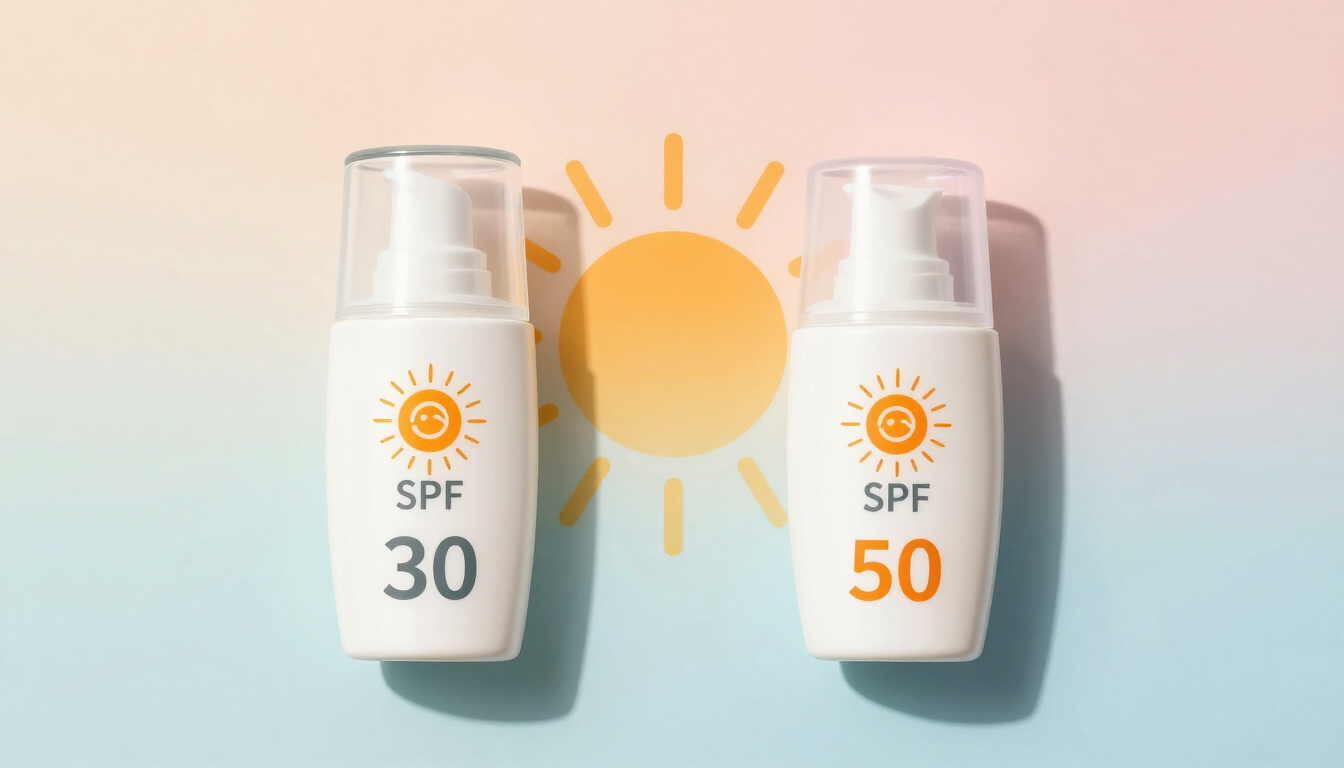
SPF 30 vs SPF 50
- SPF 15 blocks ~93% of UVB
- SPF 30 blocks ~97% of UVB
- SPF 50 blocks ~98% of UVB
The jump from 30 to 50 is about 1% more protection. SPF 50 can be a good choice for very fair skin, high-sun climates, or pigmentation-prone skin, but only if applied correctly.
UVA & broad spectrum
UVA rays age skin and deepen pigmentation. Always choose broad-spectrum protection. A high SPF without UVA protection is incomplete. See our sunscreen collection.
Application & reapplication
Most people apply only 25–50% of the needed amount, which drops real protection well below the label. Use two finger-lengths for face and neck, and reapply every 2 hours outdoors. A well-applied SPF 30 beats a thinly applied SPF 50.